Alright, let’s dive into the wild, underrated history of stainless steel sculptures—plus, how us as a stainless steel sculpture supplier play a tiny part in making modern art feel less stuffy and way more durable. I swear, I didn’t know half of this stuff before I started sourcing stainless steel pieces, so strap in if you’re into random art tech, weird early 1900s fails, and why “rusting” is the enemy of every outdoor art project. Stainless Steel Sculpture

First off, let’s get one thing straight: stainless steel wasn’t invented specifically for art. Most game-changing materials start as industrial workhorses, right? This stuff’s no different. Back in 1913, a British metallurgist named Harry Brearley was messing around with steel alloys for gun barrels—trying to stop them from corroding too fast. He added a bunch of chromium, like 10.5% minimum, and boom—he noticed a random chunk of this silver metal didn’t rust, even when he scratched it or left it out in the rain. Cool, but what did he do with it? He tried to make cutlery, actually. The Sheffield steel guys were like, “Nice, but guns are where the money’s at” and kinda brushed him off.
Fast forward a decade, and the Germans started playing with it too, but again—industrial uses first. By the 1920s, Swiss engineer Piero Castel was like, “Wait, this shiny, non-rusting metal would look sick in a building.” He used it for a tiny architectural detail in a Geneva department store—nothing big, just a trim piece. But that’s basically the first time anyone used stainless steel for something not mechanical. Then the 1930s rolled around, and artists started catching wind. Wait, no—sculptors were slow to jump in, honestly. Most artists back then liked bronze or marble; they were traditional, and this new metal felt too “factory-made,” not handcrafted enough. Plus, it was pricey, like, way more than bronze, so it was a hard sell.
World War II slowed things down too, because all stainless steel production got funneled into the war effort—planes, tanks, medical gear, even field kitchens. Once the war ended in 1945, everything shifted to civilian use. And that’s when stainless steel sculptures finally started popping up. Why? A couple big reasons: first, post-war cities were rebuilding, and architects were into this sleek, modern “international style” that hated the ornate, overdecorated stuff from the 1920s. They wanted clean lines, reflective surfaces, something that would hold up in smog and rain without turning green (looking at you, bronze). Second, sculptors were bored—they wanted new materials to play with, not just chipping marble or casting bronze in hot garages.
The first major stainless steel sculpture I can think of is something you might’ve seen in a city plaza: The Cloud Gate in Chicago? Wait no, hold up—wait that’s 2006, that’s way later. Oops, my bad. The first big public stainless steel sculpture was actually by a guy named David Smith, in the early 1950s. He was an American abstract sculptor, and he was obsessed with welding. Back then, welding metal was mostly for industry, but he picked it up to stick together these huge, blocky pieces of stainless steel. His work was called “Cubi” series—big, rectangular prisms stacked together, super simple, but when the light hit them, they reflected everything around them: trees, buildings, people. No color, no frills, just that shiny silver that changed depending on the time of day. People lost their minds a little—finally, a sculpture that didn’t try to hide its material. It was honest, like, “Hey, I’m made of this cool metal, deal with it.”
Then in the 1960s, more sculptors jumped on the bandwagon. Richard Serra, he’s the king of big, bold metal sculptures, right? He started using stainless steel because it was heavy, so you could make these massive curved walls that stood on their own, no extra support. His Tilted Arc (even though it got removed later) was a perfect example—huge, curved stainless steel wall that sliced through a New York plaza, making people walk around it, interacting with the space in a totally new way. That’s the thing about stainless steel, it’s not just pretty—it’s functional for the space too. It reflects the environment, so it doesn’t block sunlight like a bronze sculpture would, and it doesn’t rust, so you don’t have to sand it every year like steel.
Wait, but here’s the thing about early stainless steel sculptures—they weren’t perfect. The welding back then was clunky, so you’d see little seams that stuck out, like a giant metal patchwork. Also, the surface finish was either super matte or super shiny, no in-between. Then in the 1970s, metallurgists and artists kept tweaking the alloys and the finishing techniques. We got different types: 304 stainless is the common one, it’s like the Versace of stainless steel—works for almost everything, outdoor, indoor, it’s cheap enough for big public pieces. Then there’s 316, which is salt-resistant, so if you want a sculpture by the ocean, that’s the stuff. It costs more, but it doesn’t corrode in salty air—game changer for coastal cities like Miami or Sydney.
Also, the 1980s and 90s brought more modern, playful stuff. Artists started using polished stainless steel to make sculptures that looked like bubbles, or giant flowers, or even abstract shapes that change when you walk past them. Like, if you stand in front of it, you see your reflection; step to the side, and you see the sky, or a building, or nothing. It’s interactive, which is way different from old sculptures that you just look at from afar. And that’s when stainless steel sculptures went from being niche art to being everywhere—public parks, downtown plazas, even malls.
Now, fast forward to today, and stainless steel sculpture is my whole gig, basically. I’ve been in this game for like 10 years, sourcing, fabricating, installing these pieces. Let me tell you, the biggest changes are in the tech. Back when David Smith was welding, he was doing it by hand, and if a weld was off, you had to grind it down for hours. Now we have CNC cutting, which makes super precise cuts, and robotic welding that’s consistent, no weird seams. Also, we can do custom finishes—brushed, hammered, even powder coated if the client wants a color (wait, stainless can be powder coated, but you have to make sure the surface is prepped right, otherwise the paint chips). We even have something called mirror polish, which is so shiny it looks like a giant mirror, which is perfect for those Instagram-worthy public art pieces (don’t lie, you’ve taken a pic with one of those).
But here’s the part no one tells you: stainless steel sculptures aren’t just shiny toys. They’re durable. I installed a piece in a park in Detroit 8 years ago, and it’s still holding up. Detroit has super harsh winters—salt on the roads, freeze-thaw cycles, snow plows almost hit it a couple times. The sculpture’s still silver, no rust spots, no scratches that went deep. Compare that to a bronze sculpture I helped with a while back in a similar spot—after 3 years, it turned a gross green patina, and we had to sand it and re-seal it. That’s extra cost, extra work. With stainless, you might need a quick wipe down once a year, that’s it.
Also, sustainability is a big thing now, right? Stainless steel is 100% recyclable. If a client decides they don’t want their sculpture anymore, we can melt it down and make something else, no waste. That’s huge for cities that are trying to be more eco-friendly. A lot of our clients, especially in Europe and Canada, ask about recycled stainless steel first, which is awesome—we’ve got suppliers that provide certified recycled 304 and 316, so we can tell them exactly where the metal came from.
Wait, let’s talk about some of the iconic ones you might know, just to put this all in perspective. Cloud Gate in Chicago, that’s the “Bean,” right? Made by Anish Kapoor, installed in 2006. It’s 110 tons of stainless steel, polished to a mirror finish. When you stand under it, you look up and see the whole skyline warped, like a funhouse mirror. That’s using stainless steel’s biggest superpower—its ability to reflect. No other material can do that. Bronze is dark, marble is matte, fiberglass is cheap and doesn’t hold up. Stainless is the only one that’s light enough, strong enough, and shiny enough for a 30-foot curved sculpture that people take photos with.
Another one: the Gate of Hope in Sydney, right there by the harbor. It’s made of 316 stainless, so it’s resistant to the salty ocean air. It’s a big, arch-shaped piece, polished, and at sunset, it glows pink and orange from the reflection of the sky. That’s perfect for a coastal city—if they’d used regular steel, it would’ve rusted through in 5 years, but stainless? It’ll be there for 50, 60 years.
Now, if you’re reading this and you’re thinking, “Hey, I want a stainless steel sculpture for my city, or my office park, or my private garden” — you’re not alone. A lot of people think these sculptures are just for big cities, but no. I’ve done pieces for small towns in Iowa, for a school in Texas, even for a private backyard in California. The cool part is that every piece is custom. You want a giant metal owl for the library entrance? We can do that. You want an abstract shape that reflects the nearby lake? We’ve got you. You want something with a matte finish so it doesn’t glare into the office windows? No problem, we can mill the surface to be brushed or matte.
Wait, let’s get real about the process, because it’s not just “cut metal and weld.” First, the client comes to us with an idea—sometimes they have a sketch, sometimes they just say “something that looks cool, fits in this 10×10 foot space.” We work with designers to turn that idea into a 3D model, so we can see exactly what it’ll look like, how much it’ll weigh, where it needs to be anchored. Then we source the stainless steel—pick the right grade, right finish. Then we cut every piece with CNC machines, because hand-cutting would be way too imprecise. Then we weld all the pieces together, either by hand or robot, depending on the complexity. Then we grind and polish the seams so they’re invisible—you can’t even tell where one piece ends and another starts. Then we test it, make sure it’s stable, rust-proof, looks exactly like the model. Then we ship it, or install it ourselves, because we know how to anchor it so it doesn’t fall over in a hurricane or a blizzard.
I’ve seen projects go wrong, too. Once, a client wanted a super high-shine mirror sculpture for a rooftop bar in Miami. We used the wrong stainless steel grade—wait, no, we used 304 instead of 316, because they said it was cheaper. But Miami’s got that salty ocean breeze, and after a year, little rust spots started popping up on the edges. Oops, we fixed it, but we learned that lesson—never skip on the grade if it’s near salt water. Another time, a client wanted a huge sculpture for a park in Alaska, and we didn’t account for the freeze-thaw cycles, so the anchors weren’t strong enough. We had to go back and re-anchor it, no big deal, but that’s why we do site surveys before we even start fabricating.
So why does all this history matter? Because stainless steel didn’t start as an art material—it evolved with artists, with architects, with the needs of cities. It went from a random metal Brearley found in his gun barrel lab, to a niche industrial metal, to a material that’s now synonymous with modern public art. And as a stainless steel sculpture supplier, I get to be a tiny part of that story. I get to take someone’s idea—whether it’s a local artist, a city council member, a small business owner—and turn it into something that’s going to be around for decades, that people will look at, take photos with, interact with.
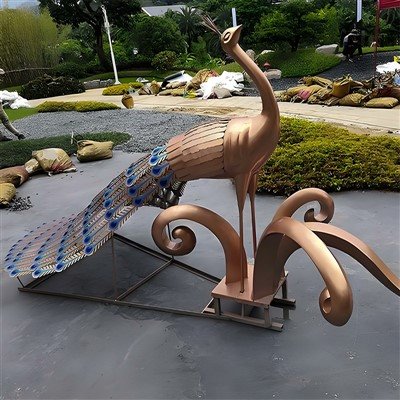
If you’re thinking about getting a stainless steel sculpture for your space—whether it’s big or small, indoor or outdoor, plain or fancy—hit us up. We can walk you through the grades, the finishes, the process, no pressure. We’ll make sure it’s durable, it’s exactly what you want, and it fits your budget. No weird hidden fees, no jargon, just straight talk about metal and art.
Architectural Stone Carving References:
- "Stainless Steel: Its History and Development." Nickel Institute, 2019.
- David Smith, the Cubi Series, Museum of Modern Art, 1959.
- Serra, Richard. "Thoughts on Sculpture." University of Chicago Press, 1987.
- "Cloud Gate: The Making of a Chicago Icon." City of Chicago Public Art Collection, 2007.
- "Stainless Steel Grades for Outdoor Applications." World Steel Association, 2021.
Quyang Zhongshi Stone Sculpture Co., Ltd.
We are one of the most experienced stainless steel sculpture manufacturers and suppliers in China. With a professional production team, we offer a wide range of products with superior quality. Please feel free to wholesale custom made stainless steel sculpture from our factory.
Address: Yangping Development Zone, Quyang County, Hebei Province, China
E-mail: 12345@QQ.COM
WebSite: https://www.zhongshisculpture.com/
