If you’re reading this, chances are you’re in the valve industry, and you know that a valve ball’s sealing performance isn’t just a “nice-to-have”—it’s the thing that separates a reliable flow control component from one that causes unplanned downtime, lost product, or even safety hazards. As a valve ball supplier with over 18 years in this space, I’ve seen firsthand how even small flaws in sealing can derail an entire operation. Early in my career, a customer called me at 2 a.m. because their pipeline (carrying high-pressure natural gas) was leaking through a quarter-turn ball valve. The culprit? A subpar surface finish on their replacement valve balls that left micro-gaps for media to seep through. That experience stuck with me, and it’s why I’ve spent years refining every step of our process to deliver valve balls that seal consistently, even in the harshest conditions. Today, I want to share the science-backed strategies we use to boost sealing performance—strategies that we’ve tested, refined, and proven with hundreds of clients across oil and gas, water treatment, chemical processing, and pharmaceuticals. Valve Balls
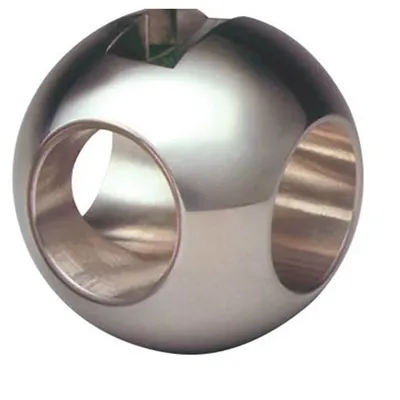
Sealing for valve balls boils down to two core things: the surface of the ball itself, and how it mates with the valve seat. For a metal-seated ball valve, the two hard surfaces (ball and seat) create a metal-to-metal seal that must account for thermal expansion, pressure fluctuations, and debris in the flow. For soft-seated valves, a resilient polymer seat sits against the ball, relying on surface precision and seat compression to block leakage. No matter the seat type, the key to a tight seal is eliminating surface irregularities that create pathways for fluid escape. Let’s break down how we address that at every stage of valve ball production, because sealing isn’t something you add at the end—it’s engineered into every step.
First, and most foundational, is material selection. Not all valve ball materials are created equal, and choosing the right one for your application is non-negotiable for consistent sealing. I’ve seen clients grab the cheapest 316 stainless steel balls for a seawater application, only to face crevice corrosion that pits the ball surface and ruins the seal within months. That’s why we work with clients to match material to media, pressure, temperature, and operating cycle. For corrosive service (like sour oil or acidic chemicals), we offer corrosion-resistant alloys (CRAs) such as duplex stainless steel, Inconel, or Hastelloy—materials that resist pitting and crevice corrosion, which are major causes of seal failure. For high-temperature applications (over 600°F), we use materials like Stellite-hardened stainless steel, where a cobalt-chromium alloy is applied via plasma transfer arc (PTA) welding. Stellite’s hardness and wear resistance mean the ball maintains a smooth surface even after thousands of cycles, so it doesn’t wear into the seat and create leaks. For soft-seated ball valves, we even offer nickel-plated carbon steel balls as a cost-effective option for low-pressure, clean water applications—carbon steel has a tighter grain structure than raw stainless steel, and the nickel plating creates a uniform, corrosion-resistant surface that works perfectly with EPDM or PEEK seats. The mistake many suppliers make is offering a one-size-fits-all material; we don’t. We test material composition for purity and hardness before a single ball is machined, because even a 0.1% impurity in a steel alloy can create a micro-roughness that ruins sealing.
Next comes machining precision, and this is where most valve ball suppliers cut corners. A valve ball is a sphere, and the roundness error (or out-of-roundness) directly impacts how evenly it presses against the seat. If a ball is even 0.0005 inches out of round, one side of the seat will have too much compression (causing premature wear) and the other side will have too little (creating a leak gap). For critical high-pressure applications, we hold roundness tolerances of ±0.0002 inches—tighter than the industry standard for general valve balls. How do we do that? We use CNC multi-axis machining centers specifically calibrated for spherical turning, not generic lathes that were designed for cylindrical parts. Spherical turning requires continuous adjustment of tool angle and feed rate to maintain curvature, and even a 0.001-degree error in tool alignment can throw off roundness. We also use post-machining inspection with coordinate measuring machines (CMMs) that scan the entire surface of each ball, not just a few points, to verify roundness, diameter, and surface geometry. Any ball that doesn’t meet our tolerance is scrapped—no exceptions. Early in my business, we sold balls with slightly looser roundness because we thought no customer would notice. We lost a $50,000 order when a power plant shut down because their valve balls leaked, and that customer never came back. Since then, we’ve scrapped 12-15% of our initial machined balls (a number higher than many competitors) to keep that tolerance tight, and our repeat customer rate has doubled as a result.
Once the ball is machined, surface finishing is the single most impactful step for sealing performance. Even a perfectly round ball with the right material will leak if its surface has micro-grooves, peaks, or pits that act like channels for fluid to escape. We spend 30-40% of our total production time on finishing, a step that most suppliers rush. The goal here is to achieve a surface roughness (Ra) of less than 0.8 micrometers for metal-seated balls, and less than 0.4 micrometers for soft-seated balls. Let’s put that in perspective: a sheet of standard printer paper has an Ra of around 2 micrometers, so we’re looking at a surface five times smoother than paper. How do we get that? We use a multi-step finishing process, not just a single grinding or polishing pass. First, we use centerless grinding with precision abrasive wheels to remove the majority of material, then move to fine grinding with diamond abrasives, and finally, a chemical-mechanical polishing (CMP) step that uses a gentle chemical slurry to remove microscopic surface peaks without creating subsurface damage. Subsurface damage is a big one—if you just grind a ball too aggressively, you create tiny cracks below the surface that can propagate over time, leading to pits that ruin sealing. Our CMP step is calibrated to remove only 0.0001 inches of material from the surface, so it smooths out peaks without damaging the ball’s core. We also test surface roughness with a contact profilometer on every batch, and for critical applications like nuclear or pharmaceutical valves, we do optical scanning to check for any micro-defects that profilometers might miss. Last year, a pharmaceutical client told us that switching to our CMP-finished balls cut their valve leakage by 95%—that’s the impact of a good finish.
Then there’s the often-overlooked step of post-machining cleaning. Even a tiny amount of machining debris, oil, or metal shavings left on the ball surface can create a barrier between the ball and seat, preventing a tight seal. I’ve seen clients receive valve balls in plastic bags with grinding swarf still attached, and when they installed them, the debris created micro-scratches in the seat that caused leaks. For that reason, we use a multi-stage cleaning process that starts with alkaline ultrasonic cleaning to remove organic contaminants, followed by acid pickling to remove free iron and residual machining debris, and finally, a deionized water rinse and dry with nitrogen gas. We even package each ball in a sealed, anti-static plastic bag with a desiccant to prevent contamination during shipping and storage. Some suppliers skip this step to save time, but we’ve found that 10% of our seal-related returns over the years were due to inadequate cleaning at the previous supplier—so we’ve made cleaning a non-negotiable part of our process.
For metal-seated valve balls, we also apply a surface coating that boosts sealing performance, and this is where a lot of suppliers use cheap, low-quality coatings that wear off quickly. We offer two primary coatings, depending on the application. For high-wear, high-pressure service, we use PTFE (Teflon) coating, applied via electrostatic spraying and cured at 350°F. The PTFE creates a low-friction surface that reduces seat wear by 40% compared to uncoated metal balls, and it fills in tiny micro-irregularities on the ball surface to create a better seal. For extremely corrosive or high-temperature applications, we use a diamond-like carbon (DLC) coating, which is harder than stainless steel and resists both corrosion and wear. The key to these coatings is thickness uniformity—any variation in coating thickness across the ball surface will create uneven contact with the seat. We measure coating thickness with a magnetic induction gauge on every ball, holding thickness variation to less than 0.0005 inches. That’s a standard most suppliers don’t meet; many will have coating thickness varying by 0.002 inches, which causes uneven sealing and early coating failure.
Finally, we pair our valve balls with seat optimization to get the full sealing benefit. A great ball can’t seal if the seat isn’t matched to it, so we work closely with our clients to specify seat materials and compression levels tailored to our balls. For example, if a client is using our Stellite-hardened, CMP-finished balls, we’ll recommend a PEEK seat with 15% compression, which is the sweet spot for tight sealing without over-compressing the seat and causing it to degrade quickly. For high-pressure applications, we often suggest double-seated configurations, where two seats create a redundant seal, to eliminate leakage entirely. We also work with clients to account for thermal expansion in their systems—for example, in natural gas pipelines, steel expands when heated, so we adjust the ball’s compression tolerance to ensure it still seals at 400°F, when both ball and seat have expanded.
I want to be clear: none of this is cheap. Our valve balls cost 20-30% more than the generic ones you’ll find from overseas suppliers. But here’s the thing: when you account for the cost of unplanned downtime, repairs, lost product, or safety incidents, that 20-30% premium is a steal. Last year, a water treatment client told us that using our valve balls instead of generic ones saved them $120,000 in unplanned shutdowns over 12 months. That’s the value of consistent sealing.
If you’re struggling with valve leakage, premature seal wear, or unplanned downtime, we can help. We don’t just sell valve balls—we work with you to analyze your application, material needs, operating conditions, and sealing requirements, then deliver customized valve balls that are built to perform. No one-size-fits-all, no cutting corners, no surprises. Whether you need balls for a 2-inch ball valve for a chemical plant or a 12-inch valve for an oil pipeline, we can engineer the sealing performance you need.
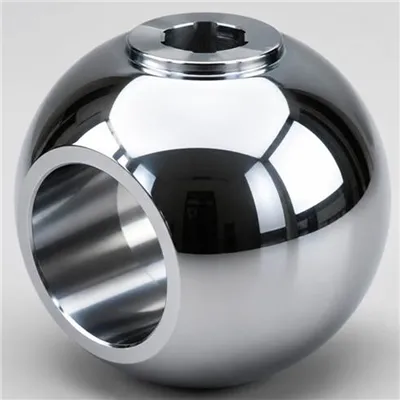
To learn more about our valve ball solutions and how we can improve your sealing performance, reach out to our team to discuss your requirements today. We’re here to help you solve your valve sealing challenges, not just sell you a part.
By Port References
- The Valve Handbook: Design and Application, 5th Edition. American Water Works Association, 2015.
- Surface Engineering for Corrosion and Wear Resistance. ASM International, 2005.
- Roundness and Cylindricity Tolerancing: Principles and Practice. Industrial Press, 2018.
- Sealing Technology for Fluid Control Components. CRC Press, 2020.
Zhejiang Jigong Valve Co., Ltd.
Zhejiang Jigong Valve Co., Ltd. is one of the most professional valve balls manufacturers and suppliers in China, also supports customized service with low price. Please feel free to wholesale durable valve balls made in China here from our factory. For quotation, contact us now.
Address: Dongou Industrial Park, Oubei Subdistrict, Yongjia County, Wenzhou City, Zhejiang Province (within Zhejiang Yinhe Machinery Manufacturing Co., Ltd.)
E-mail: Sales@cnzjsk.com.cn
WebSite: https://www.ball-china.com/
