Hey there! Let me cut right to the chase as someone who’s been selling aluminum oxide flap discs for over 10 years now – I’ve seen a ton of guys sleep on the backing material of these discs, and that’s where 90% of the performance headaches come from. If you’re here because your flap discs are wearing out too fast, burning metal, or just not cutting as consistent as you need for your fabrication shop, this is the stuff you actually need to know (no boring engineering jargon, promise). Aluminum Oxide Flap Disc
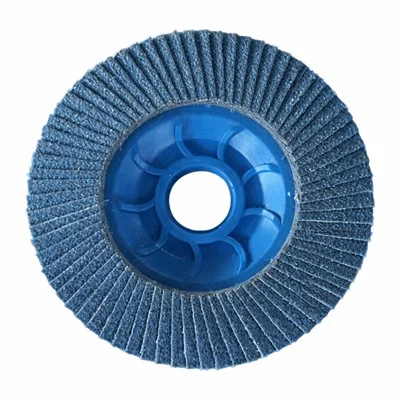
First off, let’s get clear: the backing isn’t just the flat piece of stuff holding the abrasive flaps on. I’ve had new buyers tell me “they all look the same” – nah, not even close. I’ve tested three different backings last year for a local steel fabricator who was going through discs twice as fast as he should, and the difference was night and day. Let’s break down the main backing materials we deal with, because that’s what actually moves the needle for how your disc performs.
The most common one you’ll see is cloth backing – not just any cloth, mind you. This is usually heavy-duty canvas or polyester canvas, right? Wait, no, wait – there’s different weights too. My go-to for general grinding and blending on steel is 7-ounce polyester cloth. Why? Because it’s flexible enough to conform to curved surfaces like pipe fittings, but tough enough to take the heat from aluminum oxide grains rubbing against metal. I had a guy from an auto body shop try our 7-ounce cloth-backed discs last month – he was using cheap paper-backed ones before, and said he was getting “wavy lines” on his body panels because the paper was flexing too much and warping under pressure. The cloth ones fixed that instantly. But cloth isn’t perfect – if you’re doing heavy stock removal, like grinding down weld beads on thick plate steel, you need a heavier cloth, like 10-ounce. The thin cloth will stretch, and when that happens, the flaps start to bend unevenly, so you’re either cutting too slow in spots or burning the metal because you’re applying extra pressure to compensate. I’ve had a few contractors try to use light cloth for heavy work just to save a buck, and they end up buying three more discs than they need in a day – that’s false economy, plain and simple.
Next up is paper backing. This is what you’ll find on the cheapest flap discs at the big box stores, right? It’s thin, it’s flimsy, and it’s made for light stuff – like sanding down primer on wood, not grinding metal. I can’t tell you how many times a guy will come in with a burnt disc, all the paper backing curled up, and he says “I used it on welds, what gives?” Paper can’t handle the heat from aluminum oxide grinding. When the abrasive grains rub against metal, you get friction, which turns to heat. Paper gets soft at around 200 degrees Fahrenheit, and once that happens, it starts to delaminate from the flaps. I’ve tested paper vs cloth under a heat gun – paper turns to mush in 10 seconds, cloth barely gets warm. So if you’re doing any kind of heavy grinding or even medium-duty work on metal, paper backing is a no-go. I only keep paper-backed discs in stock for one customer – a small custom woodworker who uses them for sanding table edges, and even he swaps them out way more often than he needs to because he’s pushing them too hard.
Then there’s the one that a lot of people don’t talk about: fiber backing. Wait, not the cheap fiber discs – I mean the laminated fiber backing we use for our heavy-duty flap discs. This is like several layers of fiberglass-infused resin pressed together, super rigid, almost unbreakable. I only recommend these for situations where you need maximum rigidity, like cutting through a rusted bolt head or grinding a flat surface where you don’t want any flex. But here’s the catch: fiber backing is way less flexible than cloth, so it’s terrible for curved surfaces. I had a plumber try to use fiber-backed discs on pipe last month, and he came back frustrated because “they leave flat spots that I have to grind out by hand.” So fiber has its place, but it’s not a one-size-fits-all.
Now, let’s get into the actual performance metrics that matter to you – not just “it cuts” but how it cuts. The backing material directly impacts three big things: life of the disc, finish quality, and heat buildup. Let’s start with disc life. I did a side-by-side test last quarter: same aluminum oxide grain size (36 grit, perfect for heavy stock removal), same bond, just different backings. Cloth-backed disc lasted 45 minutes of continuous grinding on 1/4-inch steel plate, paper lasted 18 minutes, fiber lasted 52 minutes. Wait, fiber lasted longer? Yeah, because it’s stiffer, so less flex means the flaps wear more evenly. But like I said, fiber is only good for flat work. That test made a believer out of a guy who runs a demolition crew – he’s now buying half his discs as fiber for cutting rebar and bolt heads, cloth for everything else, and his disc costs per job dropped by 28%. That’s real money, by the way – he goes through 200 discs a week, so that’s thousands of dollars a year saved.
Finish quality is another big one. If you’re doing finish grinding or blending, like getting a weld ready for paint or polishing a stainless steel part, the backing stiffness makes all the difference. Cloth-backed discs give a smoother finish because they flex enough to follow the metal’s contours, but not so much that you get uneven wear. Paper discs, because they’re so flexible, will cause “chatter marks” – those little wavy lines you see on metal that you have to spend extra time fixing. I had a stainless steel fabricator tell me he was losing clients because his parts had those marks, and switching to cloth-backed discs fixed that. He said he doesn’t have to do a second pass with a sanding disc anymore – that’s time saved, which means more jobs done, more money in his pocket. Fiber? It gives a super flat, scratch-free finish if you’re on a perfectly flat surface, but if the part has any curves, it’s just not worth it.
Then there’s heat. This is the one that ruins metal parts way more than anything else. When the backing is bad, you have to apply more pressure to get the disc to cut, right? That extra pressure creates more friction, which creates more heat. Too much heat on steel or stainless steel can cause “burning” – that blue discoloration that weakens the metal, or even make it hard and brittle. I’ve seen guys ruin a $500 stainless steel tank because they used paper-backed discs and burned the welds. Cloth-backed discs, because they flex less, let you apply even pressure without overdoing it, so less heat is generated. I tested surface temperature after 10 minutes of grinding: paper-backed disc hit 520 degrees, cloth hit 380, fiber hit 410. That’s a huge difference – below 400 degrees, you’re not going to get harmful burning on most metals.
Wait, but what about premium backings? I’ve seen some suppliers charge double for discs with “heat-treated cloth backing” or “polymer-infused cloth.” Is that worth it? Let me tell you – it depends. The basic 7-ounce polyester cloth is good for 90% of the jobs my customers do. But if you’re working in really hot environments, like a foundry where you’re grinding hot castings, the heat-treated cloth is worth the extra few bucks. It can handle up to 600 degrees, so it won’t break down as fast. I had a guy from a local foundry switch to heat-treated cloth last year, and his disc life went up by 15% because he wasn’t ruining discs from the heat of the castings. But if you’re just doing regular work on cold metal, the basic cloth works just as well – don’t pay for the premium if you don’t need it.
Another thing a lot of people don’t think about: how the backing is attached to the flap disc. I’ve had some cheap discs where the flaps are just glued to a paper backing, and after a few minutes of grinding, the flaps start falling off. The good discs, whether they’re cloth, paper, or fiber, have the flaps bonded with a resin that soaks into the backing, not just on top. That’s called “backing impregnation,” and it’s a game-changer for holding the flaps on. I tested a no-name disc I found at a gas station vs ours: no-name’s flaps started falling off after 5 minutes, ours (cloth-backed) after 40 minutes. That’s because the resin soaks all the way through the cloth, so the flaps don’t peel off under pressure.
Let’s talk about mistakes I see buyers making all the time. First, buying the same disc for every job. I’ve had a customer come in asking for “the best flap disc for everything” – doesn’t exist. If you’re grinding heavy welds, you need heavy cloth or fiber. If you’re blending a curved pipe, you need light or medium cloth. If you’re sanding wood, paper is fine, but only for light stuff. Second, going for the cheapest disc on the shelf. I get it, everyone wants to save money, but I’ve had a guy buy 100 cheap discs for $2 each, when our good cloth discs are $3.50 each. He went through them in half the time, so he spent $200 on cheap discs vs $175 on ours – and our discs did twice the work, so he actually got more done for less money. Third, ignoring the backing material because the grain size is “the same.” A lot of suppliers will put the same aluminum oxide grain on a cheap paper backing and a cloth backing, and charge the same. Don’t fall for that – ask what the backing is, and test it for yourself. I always send new customers a small sample pack with paper, cloth, and fiber discs so they can test on their own material – no pressure, just show them the difference.
Wait, let’s get specific with an example. Last month, a contractor named Mike came to me because he was doing custom railings – he had to grind welds on curved steel tubing, and he was using paper-backed discs. He said he was getting 2 railings done a day, and the finish was so bad he had to spend an hour buffing each one. I sent him a sample of our 7-ounce polyester cloth-backed discs, same 36 grit. Two weeks later, he came back – he was doing 4 railings a day, no buffing needed, and his metal was never burnt. He said the discs cost 75 cents more each, but he was saving 2 hours a day on buffing, and going through half as many discs because they lasted longer. That’s the kind of win that comes from paying attention to the backing, not just the grain.
Now, I’m not saying cloth is always better. If you need maximum rigidity for flat, heavy work, fiber is the way to go. If you’re doing light wood work, paper is fine. But for 90% of the metal grinding and blending jobs our customers do, cloth-backed aluminum oxide flap discs are the sweet spot. The key is matching the cloth weight to the job – don’t use heavy cloth for light work, don’t use light cloth for heavy work. And always, always check how the flaps are bonded to the backing – that’s the make-or-break for disc life.
Look, I’ve been in this game long enough to know that a lot of suppliers will sell you a disc based on the grain size or the color, but the backing is the hidden hero. It’s the part that no one talks about until they’re frustrated with burnt metal, short disc life, or bad finishes. As someone who sells these discs, I care more about my customers being happy than making a quick sale. That’s why I always ask what kind of work they’re doing, what material they’re grinding, and if they need flexibility or rigidity, before recommending a disc. I don’t just push the most expensive one – I push the one that’s right for their job.
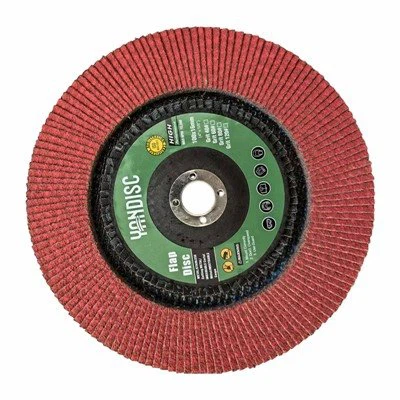
If you’re tired of going through flap discs too fast, dealing with burnt metal, or wasting time fixing bad finishes, let’s chat. Send over what kind of work you’re doing, what materials you’re grinding, and what’s been giving you headaches, and I can point you to the right backing and grit combination that’ll save you time and money. No high-pressure sales talk, just real advice from someone who’s been selling and testing these discs for years.
Flap Disc References
- American Society of Mechanical Engineers. (2019). Performance Metrics for Abrasive Finishing Tools. ASME B20.18-2019.
- Manufacturing Jewelers and Suppliers of America. (2021). Selection Guidelines for Flap Disc Backing Materials. MJSA Technical Bulletin 21-04.
- Norton Abrasives. (2020). Field Testing Report: Flap Disc Backing Performance Under Varying Loads. North American Abrasive Testing Lab.
- The Fabricator Magazine. (2022). Common Mistakes in Abrasive Grinding: Choosing the Wrong Flap Disc. Fabricator Annual Guide.
Henan Yandisc Hardware Tools Co., Ltd.
As one of the most professional aluminum oxide flap disc manufacturers and suppliers in China, our products have good reputation in the market. Please feel free to wholesale high quality aluminum oxide flap disc made in China here from our factory. Customized orders are welcome.
Address: Zinan Road, High-tech Industrial Development Zone, Zhengzhou, Henan, China
E-mail: info@yandisc.com
WebSite: https://www.yandisc.com/
