If you’ve ever wondered how your smart thermostat tells your AC to kick on automatically, or how your delivery van’s GPS sends real-time location updates to your dispatcher, there’s a hidden workhorse making all that happen: communication towers. As someone who’s spent the last decade building and maintaining these towers for businesses and operators, I get asked all the time, “How do these metal structures actually enable machine-to-machine (M2M) communication, not just human calls or texts?” Let’s break it down in plain terms—no jargon, just how this tech works for the machines that run our world. Communication Tower
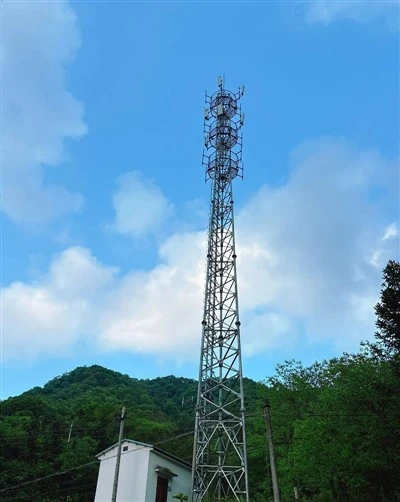
First, let’s start with the basics: what even is M2M communication, anyway? It’s exactly what it sounds like—devices talking to each other without any human in between. Think of a utility meter sending energy usage data back to the power company, a sensor on a farm irrigation system triggering a sprinkler when soil moisture drops too low, or a fleet tracker monitoring how long a truck idles on routes. None of these need a person dialing, tapping, or typing; they just need a way to send and receive data reliably, 24/7, no dead zones. That’s where our towers come in—way more than just big cell towers for your phone.
Here’s the thing: M2M devices aren’t all the same. Some are low-power, like those tiny sensors on streetlights that turn lights on when it gets dark—they barely use any battery, so they need a signal that doesn’t eat up power. Others, like the high-resolution cameras on oil pipelines that send full video clips, need way faster bandwidth. Our towers are built to handle both, which is why they’re such a flexible foundation.
Let’s get specific about how the towers make that happen step by step. First, every M2M device has a small radio transmitter built in. That transmitter sends out tiny data signals—usually short bursts of text or small files, not big videos—at a specific frequency. Our towers are equipped with radio receivers that are tuned right to those exact frequencies. So when your smart meter sends a 100-byte blip of data saying you used 2 kWh that hour, that blip doesn’t travel all the way to a satellite or a distant cell tower. It bounces straight to the nearest tower’s receiver, no extra steps needed.
Wait, why not just use cell phones? A lot of M2M devices are deployed in places where cell service is spotty—remote farm fields, mountainous regions, industrial parks on the edge of town, even underwater (for devices monitoring coastal water quality). Our towers are placed strategically to fill those gaps. We work with logistics companies to put up towers along highway routes so fleet trackers never lose signal, and with utility companies to install towers in rural areas where big carriers don’t bother covering. That’s the part most people miss: communication towers for M2M aren’t just for dense cities—they’re designed for the middle of nowhere, where the machines actually need to work.
Then there’s the backhaul part, which is how the data gets from the tower to the network that uses it. Once the receiver grabs the M2M signal, it sends it via fiber optic cable, microwave link, or even a direct satellite feed (for super remote spots) to a central data hub. That hub is where the data gets stored, analyzed, or sent to whoever needs it—like the utility company billing you, or the dispatcher rerouting a delivery truck. Our towers are built to support all three backhaul options, so we don’t have to compromise on performance no matter where a client’s devices are.
Let’s talk about a real example to make this concrete. Last year, we worked with a regional water district that needed to monitor 500 remote well pumps across their service area. Before they had our tower network, they’d send technicians out every month to manually check each pump—costing them thousands in labor, and sometimes the pumps would run dry for days before anyone noticed, leading to pipe damage. Now, each pump has a tiny M2M sensor that tracks water pressure and flow. Every 15 minutes, it sends that data to the nearest tower, which sends it to the district’s control room. If a pump fails, the system sends an alert instantly, so a tech can fix it before a pipe bursts. That’s all made possible because our towers are close enough to pick up the low-power sensor signals, and connected to their data hub with fast backhaul.
Another big point: M2M signals are way more reliable than human-centric signals. Your phone can handle a dropped call here and there, but an M2M sensor can’t. If a farm’s soil moisture sensor fails to send a signal for an hour, the crops could wilt. Our towers are built with redundancy—meaning we have backup receivers and power supplies, so even if a storm knocks out the main power, a generator kicks in within 10 minutes. We also place our towers high—usually 100 to 200 feet tall, sometimes more in hilly areas—so the signals don’t get blocked by trees, buildings, or terrain. That height is non-negotiable for M2M; a tower that’s too low will have dead zones where devices can’t communicate.
Wait, what about different types of M2M tech? There’s LPWAN (Low-Power Wide-Area Network) for those tiny, long-range sensors that run on batteries for 10 years, and CBRS (Citizens Broadband Radio Service) for faster, higher-bandwidth devices like fleet cameras. Our towers are modular, so we can add whatever hardware a client needs—LPWAN receivers for low-power sensors, CBRS radios for high-speed devices—without tearing down the whole tower. That’s a huge win for our clients, because they don’t have to invest in a whole new network when their M2M needs change. I can’t tell you how many times we’ve had a client start with just smart meters, then a year later add smart traffic sensors, and we just swap out a few parts on their existing tower. No extra construction, no extra cost.
A common question I get: why not just use satellite for all M2M? Satellites work, but they’re way more expensive, and the latency (delay) is higher. If a delivery truck needs to send a real-time location update, a 2-second delay from a satellite isn’t a big deal, but if a sensor on a gas pipeline detects a leak, you need that alert in milliseconds. Our ground-based towers are way faster, cheaper, and more reliable for most M2M use cases. Satellites are great for super remote places where even our towers can’t reach, but for 90% of M2M applications, our towers are the better choice.
Let’s also talk about security, which is huge for M2M. A lot of people don’t realize that M2M data is often sensitive—utility data, delivery locations, industrial sensor readings. Our towers use encrypted signals between the device and the receiver, so no one can intercept that data. We also have firewalls on our backhaul links, so only the intended data gets sent to the client’s hub. That’s something we prioritize because we know a breach could cause big problems—like a hacker altering a utility’s sensor data to overbill customers, or a bad actor messing with pipeline sensor alerts.
Now, let’s tie this back to what we do as a communication tower supplier. We don’t just sell towers—we design, site, and equip them specifically for M2M. That means we do a site survey to find the best spot to avoid dead zones, pick the right height, and install the exact hardware a client needs. We work with everyone from small farm operators to big utility companies to logistics firms, so we get to tailor every solution to what they’re actually using. If you’re setting up a fleet of M2M delivery trackers, we can place towers along your most-used routes. If you’re monitoring remote infrastructure, we can put towers in areas that no other carrier covers.
Here’s the part where I’m here to help: if you’re looking to set up M2M communication for your business, and you’re tired of dead zones, unreliable signals, or expensive satellite fees, we can work with you to build a custom tower network that fits your needs. We’ll walk through your devices, your locations, and what data you need to send, then design a solution that’s scalable and cost-effective. No generic packages, no pushy sales pitches—just straight talk about what works for M2M.
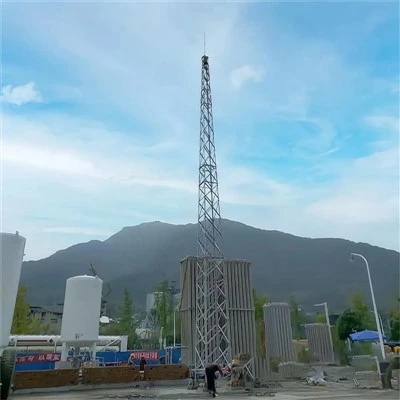
Ready to chat through your M2M communication needs? Reach out, and we can schedule a time to go over your project, no obligation.
Communication Tower References:
- ITU-T Recommendation Y.2001, General overview of NGN
- GSMA, “M2M Communications: A Guide to Deploying LPWAN Networks”
- Federal Communications Commission (FCC), “CBRS for Industrial and M2M Applications”
- IEEE Communications Magazine, “Wireless Communication for Machine-to-Machine Applications”
Hunan Zhubang Hongsheng Construction Technology Co., Ltd.
As one of the most professional communication tower manufacturers and suppliers in China, we’re featured by quality products and good price. Welcome to buy high-grade communication tower made in China here and get quotation from our factory. Customized orders are welcome.
Address: Lutang Village, Yong’an Town, Liuyang City, Changsha City, Hunan Province, Hunan Zhubang Hongsheng Construction Technology Co., Ltd.
E-mail: 19898838989@163.com
WebSite: https://www.chinaenerto.com/
