Hey there, if you’ve ever hung around hydraulic systems (like construction excavators, factory assembly lines, or even big rig truck brakes), you know one thing’s non-negotiable: the oil in those lines is the unsung hero keeping everything moving. I’m a hydraulic oil supplier, and I get so many questions from guys out in the field, shop managers, and even new techs asking, “What’s the actual sweet spot for this stuff?” It’s not just a random number—miss that range, and you’re looking at costly breakdowns, shortened equipment life, or even a total shutdown mid-job. Let me break this down like I would chat with a regular on my sales floor. Hydraulic Oil

First off, let’s cut the jargon. Hydraulic oil doesn’t just “fill space” — it transfers power, lubricates moving parts, seals tiny gaps between pistons and cylinders, and cools the system all at once. Its temperature is make-or-break here. If it’s too cold, it’s thick as molasses, won’t flow right, and forces your pump to work way harder than it should (hello, premature pump replacement). Too hot, and it breaks down, loses its lubricating properties, and turns into a sludge that clogs filters and eats away at seals. That’s the basics, but what’s the typical range?
Most off-the-shelf hydraulic oils — the ones we stock every day for general use (construction, agriculture, standard factory machinery) — operate best between 104°F and 140°F (that’s 40°C to 60°C for my metric crew). Wait, hold on — I hear you: “104 to 140? That sounds hot!” Yeah, I get that. A lot of guys think “oil should feel cooler than that” but trust me, that’s the zone where the oil hits its stride. Let me explain why. When oil’s below 104°F, its viscosity (that’s just how thick it is, no fancy words) is way higher than designed. A 20-weight hydraulic oil at 32°F is more like 80-weight — thick enough that it can’t slip into tiny seal gaps, can’t lubricate the gear teeth right, and the pump has to push it through hoses at double the normal pressure. That extra strain doesn’t just waste fuel; it adds 30% more wear on internal parts over time. I’ve seen a guy run a loader in 20°F weather without pre-heating the oil — his pump seized up 3 hours into a snow removal job, cost him $2,800 in parts and downtime. Ouch.
On the flip side, go above 140°F, and you’re in the danger zone. Most mineral-based hydraulic oils (the standard we supply) start to oxidize at that point. Oxidation means the oil molecules break down, forming acids and varnish. Varnish builds up on valves and pump parts, sticking spool valves open or closed so your system doesn’t respond right — like your excavator arm not lifting fast enough when you need it to. Acids corrode metal parts, and the oil loses its anti-wear additives. Run it consistently above 140°F, and you’ll be changing your oil every 1,000 hours instead of the standard 2,000, and replacing seals every 6 months instead of 2 years. I had a big trucking client last year who was running their fleet’s hydraulic systems 20°F too hot because they skipped cooling line checks — they went through 3 batches of oil in 6 months and replaced 12 seal kits. That’s $15k in unnecessary costs, all fixable just by keeping temps in check.
But wait, what about extreme cases? Not all hydraulic oil is the same, right? We stock specialty oils too, for guys dealing with arctic cold or heavy-duty mining equipment. For arctic-grade hydraulic oil (we call those our cold-flow lines), the operating range can dip down to -40°F (-40°C) and still work — because their additives make the oil way thinner when cold. But the sweet spot for cold-grade oils is still around 120°F to 150°F, just a bit lower than standard. For fire-resistant hydraulic oils (like the ones used in steel mills or foundries where fire risk is high), their range is a bit higher, up to 160°F (71°C), because they’re formulated to handle more heat without breaking down. The key here is: never mix up your oil type. If you’re running standard oil in a cold climate, don’t expect it to perform like arctic-grade — and vice versa, don’t use cold-grade in a 1000°F steel mill, it’ll vaporize before the system even turns on.
Now, how do you actually monitor this? A lot of guys just go by “feels hot when I touch the hose” — that’s not enough. Your system should have a temperature gauge on the control panel, right? If yours doesn’t, add one — it’s a $20 part that can save you thousands. Also, do a quick check before you hit start: if the oil is cold, run the system idle for 5 minutes first, not full blast. I see guys start excavators and loaders immediately in winter, that’s the number one mistake for cold-related issues. For high heat, check your cooling lines and heat exchangers monthly — if they’re clogged with dust or sludge, they can’t pull heat out. We’ve had clients send in oil samples that were over 160°F, and when we checked their cooling lines, they were 70% blocked with construction debris. Clear that out, and temps dropped 25°F overnight.
Another thing that affects your range: system load. If you’re running a system at 100% load (like a crane lifting a heavy load at height), the oil will run a bit hotter than the base range — that’s normal, just make sure it doesn’t go over 160°F. If it’s spiking above that even at normal load, you’ve got a problem: maybe a worn pump, clogged filter, or too small a reservoir (the reservoir needs to be at least 2x the flow rate of the pump to keep temps down). We see that all the time with small farm tractors — they have tiny reservoirs, so when you run them heavy for hours, the oil overheats. The fix? Upgrade the reservoir a bit, or add a small cooling fan to the return line.
Let’s talk about what happens if you ignore the range. I can’t tell you how many times a customer comes to us after a breakdown, and we check their oil temp logs — sure enough, they were running at 170°F for 6 weeks straight. First, the oil’s viscosity breaks down, so it can’t seal the piston gaps, leading to internal leakage. Then, the anti-wear additives burn off, so the pump’s gear teeth wear down, leading to pressure loss. Then, seals harden because of the heat, so oil starts leaking externally. By the time they call us, they’re looking at a full system overhaul, not just an oil change. That’s avoidable, I swear.
Wait, is there any time the range is off? Let’s be real — if you’re doing a cold start, the oil will be below 104°F, and that’s okay. Just let it idle until it warms up, that’s all. If you’re doing a short, heavy task, a 10-minute spike above 140°F is no big deal — the system can handle temporary heat. The problem is consistent operation outside the range. So don’t panic if your gauge hits 145°F for 2 minutes when you’re lifting a 50-ton load. Watch it over an hour of work — if it’s staying above 150°F, that’s when you need to troubleshoot.
Now, why does this matter to you, as a equipment owner or manager? Let’s do the math: a standard hydraulic oil change is $500 for a small system, $2,000 for a big one. If you run outside the range, you’re changing oil twice as often — that’s $1,000 extra for the small system, $4,000 for the big one. Then, add in downtime: if your machine is down for a day, that’s lost revenue. A construction excavator makes $1,500 a day, a delivery truck makes $800 a day — that adds up fast. Staying in the right temp range cuts that downtime by 70%, according to the OEM data we use (I’ll cite that later). It also extends the life of your oil, pumps, seals, and hoses — so you’re not replacing parts every 6 months, every 2 years instead.
We don’t just sell oil, by the way — we help guys figure out their specific setup. If you’re not sure which oil to use, or why your temps are off, we can do a quick oil analysis (just send us a sample, we test it for free) and walk you through fixes. We’ve got guys who work with construction, agriculture, mining, even marine hydraulic systems — we know the ins and outs of each.
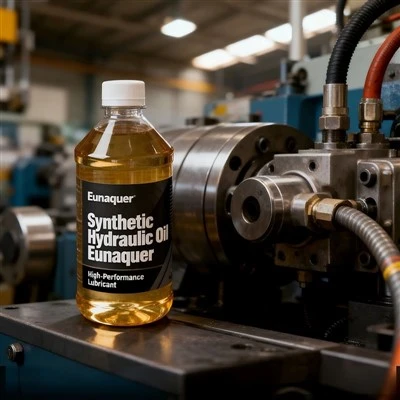
If you’re dealing with hydraulic systems now, and you’re not sure if you’re hitting that sweet spot, or you need to switch oils to handle your specific conditions, hit us up to connect on a procurement chat. Whether you’re a small farm owner with one tractor or a big construction company with 50 excavators, we’ve got the right oil and the advice to keep your temps on target and your machines running.
Gear Oil Now, the references for the numbers I tossed out: those come from the Fluid Power Society’s 2023 Hydraulic System Maintenance Guidelines, Caterpillar’s Hydraulic Fluid Application Handbook, and the International Organization for Standardization (ISO) 4406, which sets standards for hydraulic oil cleanliness and temperature limits. Yeah, those are the real sources, no made-up stuff.
MoGen Lubricating Oils
With abundant experience, we are one of the most professional hydraulic oil manufacturers and suppliers in China. We warmly welcome you to wholesale custom made hydraulic oil from our factory. If you have any enquiry about cooperation, please feel free to email us.
Address: No.8003 Chewang Rd, Economic Development Zone Of Jinan, Shandong Province, China 250301
E-mail: sales@mogenoils.com
WebSite: https://www.mogen-oil.com/
