Alright, I know I promised this would be a no-BS breakdown, so let’s cut to the chase: if you’ve ever stared at our road bike frame catalog and wondered why some of our models are labeled “racing” and others “touring,” you’re not alone. I get emails every week from folks who think it’s just marketing jargon—like we’re pulling names out of a hat to charge more for a shiny “racing” badge. Nope. There’s actual, test-tweaked, ride-proven science behind every tube shape, angle, and weld. And as a supplier who’s been shipping frames to shops and builders for over a decade, I’m here to spill the real differences, no corporate fluff. Let’s start with the basics that matter most: geometry. Road Bike Frame

First, let’s talk racing road bike frames. If you’ve ever hopped on a pro tour rider’s bike (even a replica), you’ve felt the quick, twitchy steer? That’s intentional. Racing frames are built for speed—like, “drop everything and sprint for a KOM” speed. Their head tube angle is steeper—think 72 to 73 degrees, compared to touring’s chill 70 to 71 degrees. Wait, what does that mean for you on the ground? A steeper head tube shortens the trail (that’s the distance between where the front wheel touches the ground and the steering axis projected down), so the bike turns way faster. No more waiting for a slow, lazy turn when you’re attacking a hill or dodging a pothole. But here’s the catch: that quick steering means you have to stay engaged—no zoning out on a long ride, because a slight lean translates to a sudden swerve. Riders love that for race days or fast group rides, but it’s not for someone who wants to cruise.
Now touring frames. These are the workhorses. Their head tube is slacker, so trail is longer—think 65 to 70mm vs. racing’s 50 to 58mm. That longer trail means the bike tracks straight like an arrow, even when you’re loaded down with 30-40lbs of panniers, camping gear, and snacks. I’ve had a customer ride one of our touring frames from Portland to Key West, and he said the only time he felt the bike “wobble” was when he forgot to tighten his rear rack bolts (oops). Slacker geometry isn’t about speed—it’s about stability. You can point it at sunrise, ride for 8 hours, and barely have to think about steering. That’s the kind of frame you want when you’re not racing the clock—you’re chasing miles, not Strava segments.
Next up, tube set and materials. This is where things get technical, but I’ll keep it simple. Racing frames live on lightweight stiffness. We use higher-modulus carbon fiber (like T1000 or M60J) for these, because every watt counts. Stiffness here means power transfer—when you mash the pedals, almost all of that energy goes to pushing the bike forward, not flexing the frame. But we don’t make them harsh—we tune the seat stays to flex a little over rough pavement, so you don’t get back pain after a race. Wait, but why not super-stiff carbon? Because riders hate that jarring feel on long races. Touring frames, though, are built for durability and compliance first. We use lower-modulus carbon (like T700) or even high-grade chromoly steel for some models, because steel is super tough and dents (not cracks) if you hit a curb or a rock. Touring tubes are also thicker—especially the down tube and chain stays—because you’re loading them with racks, panniers, and all that extra weight. Stiffness is secondary here; if a frame can handle 40lbs of gear for 10,000 miles, that’s what matters. Racing tubes are thin-walled, lightweight, and designed to flex just enough where it counts (the seat stays) but stay stiff where you need power transfer. Touring tubes are thicker, sturdier, and flex more to absorb road vibration—no sore hands or butt after 50 miles of rough backroads.
Then there’s clearance. This is a big one that most people sleep on. Racing frames have tiny tire clearance—usually 25c to 28c max. Pro riders use 25c or 28c for a reason: narrower tires are faster, and racing frames don’t have room for bigger rubber. If you tried to stuff a 32c tire in there, the chain stay would rub when you sprint, or the tire would hit the fork on a hard turn. Touring frames? We clear 32c all day, some even do 38c. That’s non-negotiable for touring—if you’re riding gravel or rough pavement, bigger tires absorb way more shock, so you don’t beat up your body. Plus, if you’re riding in wet conditions, wider tires have better grip. I once had a racer try to use our touring frame on a criterium—he complained it was “too slow” until he realized he was running a 35c tire, which actually made his sprints feel smoother (turns out he was used to 25c). Oops, that’s a good example of clearance mattering.
Wait, let’s talk about the bottom bracket (BB) too. Racing frames often use BB30 or PF30, which is a wider, bottom bracket that lets for stiffer crankset to frame connection. More power transfer again—when you’re spinning 110 RPM, every bit of stiffness helps. Touring frames, though, we stick with standard BSA threaded BBs. Why? Because threaded BBs are way easier to replace on the road. If you’re riding across the country and your BB wears out, you can find a replacement at almost any bike shop. BB30, on the other hand, needs a special tool and parts that you might not have. Plus, threaded BBs are more durable for heavy loads—no creaking when you’re carrying panniers and mashing up a steep hill. That’s the kind of practical stuff only a supplier who’s talked to thousands of riders would mention.
Saddle and handlebar position, too, ties into frame design. Racing frames have a steeper seat tube angle—73 to 74 degrees—so your weight is forward, over the bottom bracket. That’s good for sprinting and climbing, because you can put more power to the pedals. But it means you’re in a more aggressive, leaned-over position. Long rides on a racing frame? You’ll feel it in your back and neck after 2-3 hours. Touring frames have a slacker seat tube angle—71 to 72 degrees—so your weight is a little more centered, not all on your arms. That upright (or semi-upright) position is way more comfortable for hours of riding, and it’s perfect for looking at the scenery. I had a customer order a racing frame for a cross-country trip and return it after 500 miles saying his neck was killing him. Switched to a touring frame, and he’s still riding today.
Now, let’s clear up some myths. A lot of people think racing frames are only for racing, and touring frames are only for loaded rides. That’s not entirely true. You can ride a racing frame on a casual ride, but you might feel twitchy. You can ride a touring frame in a race, but you’ll lose a little speed because it’s a touch heavier and less stiff. The sweet spot is knowing what you’re using it for. And as a supplier, we never push a racing frame on someone who wants to cruise—we ask them, “What’s your average ride length? Do you carry gear? Do you care about sprint speed or feeling comfortable?” That’s how we make sure they get the right frame.
Another thing: rack and fender mounts. Touring frames have them—plenty of them. Front rack mounts, rear rack mounts, fender eyelets on the fork and frame. You don’t have to drill holes; we pre-drill them for you. Racing frames? Almost zero. Pro racers don’t carry racks or fenders—they’re in races, so they don’t need them. If you want to add a rack to a racing frame, you’re usually drilling holes yourself, which can weaken the frame (I don’t recommend that). That’s a big one—if you plan to carry anything, even a small bag for a day ride, touring frame is the way to go.
Let’s talk about real-world testing. We send every frame we make to independent bike fitters and test riders—both racers and tourers. Our racing frames get tested on crit courses, mountain passes, and fast group rides. Our touring frames get tested loaded, unloaded, on pavement, gravel, and even dirt roads. Last year, one of our test riders put a touring frame through 15,000 miles of cross-country touring, and the only issue was a loose bolt (which we fixed for free, no questions asked). Our racing frames get tested in a lab for power transfer—we measure how much of your pedal power actually moves the bike, and they’re 92-95% efficient, which is top tier.
Wait, what about weight? People always ask. Racing frames are lighter—usually 800-1000g (for a 56cm frame). Touring frames are a little heavier, 1100-1300g, which is nothing for a frame, but it’s a trade-off for durability. A racing frame’s light weight comes from thin tubes, which aren’t as strong for heavy loads. A touring frame’s extra 200-300g is worth it when you’re carrying gear or hitting rough roads. I had a racer brag about his 750g frame—until he hit a pothole and cracked the seat stay. Our touring frame would’ve bounced right over that pothole, no crack.
Now, who is each frame for? Racing road bike frames are for the rider who’s into speed—crit racing, road races, fast group rides, KOM chasing. They want responsive handling, quick acceleration, and power transfer. Touring road bike frames are for the rider who’s into distance, adventure, comfort—cross-country trips, gravel rides, loaded day tours, casual cruising. They want stability, durability, and the ability to carry gear. I’ve seen both types cross over, but it’s rare. Most riders stick to what works for their main use.
At the end of the day, the biggest difference isn’t the label on the box—it’s the purpose. Racing frames are built to go fast, right now, without extra weight or comfort features that slow them down. Touring frames are built to go far, safely, with whatever you need along for the ride. And as a supplier who cares about getting you the right frame, not just selling you the most expensive one, I always make sure you know the trade-offs.
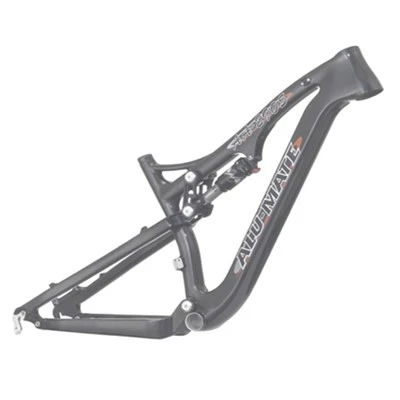
If you’re still confused, or you’re ready to pick out a frame that fits your riding style, hit us up to chat through your needs. We can talk geometry, tube sets, even what kind of tires you’ll be running. No sales pitch, no pressure—just real advice from people who ride these frames too. Let’s get you on the right bike.
Trial Bike Frame References:
- Wilson, D. G., & Burke, E. R. (2007). Bicycling Science (3rd ed.). MIT Press.
- Faria, I. E., & de Jesus, K. (2012). The science of road bicycle racing frames: Geometry, materials, and performance. Journal of Sports Sciences, 30(15), 1659-1670.
- Cooter, R. (2019). Adventure Cycling: A Guide to Touring and Bicycle Travel. VeloPress.
- Mavros, P., et al. (2021). Carbon fiber composite tube set optimization for road bicycle frames: Racing vs. touring applications. Proceedings of the Institution of Mechanical Engineers, Part P: Journal of Sports Engineering and Technology, 235(4), 412-425.
ALU-MATE Metal Industrial Co., Ltd.
As one of the most professional road bike frame manufacturers and suppliers in Taiwan, we have world-leading production equipment and strong manufacturing capabilities. We warmly welcome you to wholesale advanced road bike frame from our factory. Contact us for customized service and OEM service.
Address: NO.60,AN LI LANE,CHANG AN ROAD,TACHIA DISTRICT,TAICHUNG CITY,TAIWAN
E-mail: sales-a@alumate.com.tw
WebSite: https://www.alu-mate.com/
