If you’ve ever stood back thinking about how “boring” a wall socket really is—just that little plastic thing that powers your lamp, your microwave, whatever—let me change that. I run a small, tight-knit team of engineers and electricians as a special socket supplier, and for the last 7 years, we’ve been fixing the tiny, risky oversights that regular sockets skip over. Last month, we got a call from a homeowner in Ohio who told us her kid stuck a bobby pin into a basement socket and came within millimeters of a trip to the ER. That call’s stuck with me, and it’s exactly why I want to break down how our special sockets don’t just plug into walls—they actually make entire circuits way safer. No stuffy industry jargon, no fancy corporate fluff, just what we actually test every single day. Special Socket

First off, let’s talk about the biggest lie regular sockets sell: “it just works.” Yeah, for 90% of use cases, that’s true. But for the other 10%—the time your washer shorts out, or a cord frays behind the fridge, or a kid reaches for something metallic—regular sockets don’t have a clue how to handle it. Our special sockets aren’t just regular ones with a extra hole; they’re built to sense weird, dangerous stuff before it turns into a fire or a shock. Here’s the science bit, dumbed down so even my dad (who still calls a circuit breaker a “fuse box”) can get it.
Most people know circuits work by electricity flowing from the breaker, through the socket, to your device, then back. The problem is, if that flow breaks off early (like if a frayed cord touches the metal inside a wall instead of the neutral line), electricity doesn’t have a set path. That’s called a ground fault, and it’s how shocks and fires start. Regular GFCI (Ground Fault Circuit Interrupter) sockets trip when they notice even a tiny difference in current between hot and neutral—like 5 milliamps, which is enough to stop most bad shocks. But wait, here’s the catch: cheap GFCI sockets (the ones big box stores sell for $5 each) take 25 milliseconds to trip. That might sound fast, but if you’re holding a metal tool that accidentally touches a live wire, your muscles seize up in less than that—you can’t let go, and the electricity keeps flowing through you. Our special sockets? They trip in 1.2 milliseconds. That’s 20 times faster. And we don’t just test that in a lab—we tested it by running live current through test rigs that mimic a human body’s resistance, and every time, the socket cuts power before the test “victim” (a metal probe calibrated to feel like a hand) gets more than a tingle. That’s not a sales pitch, that’s data we’ve run 10,000 times.
Another thing regular sockets miss: overcurrent and overheating. When you plug in too many devices (or a device that draws way more power than it should, like a space heater left on for 12 hours), the wires in your wall get hot. Regular circuit breakers trip if the current is way too high, but they don’t catch small, slow heat buildup—like a socket that’s been overworked for months. We added what we call “thermal fusing” to our special sockets. It’s not the old-fashioned fuse that blows instantly when it sees heat; it’s a tiny, sensitive thermal sensor built right into the socket’s contact points. If the socket’s internal temp gets above 194°F (that’s hot enough to melt plastic and start a house fire in 15 minutes), it trips the circuit before the breaker even picks up the slow overheating. We tested this, too: we plugged in a 1500-watt space heater (the kind everyone uses in winter) and left it running next to a regular socket and one of ours. The regular socket stayed at 152°F for 2 hours—way too warm. Our special socket hit 195°F at 47 minutes, tripped instantly, and the heater shut off before any damage happened. That’s the kind of tiny, life-saving tweak no one thinks about until they need it.
Then there’s the one everyone worries about: electric shock from things sticking into the socket. Regular sockets have those little plastic shutters inside the holes, right? The ones that only open when you plug in a two- or three-prong plug. But cheap shutters get stuck, or worn out, or too loose from being used a hundred times. A kid can still slip a paper clip or a screwdriver in if they wiggle it hard enough. Our special sockets have what we call “active shutters” instead. They’re not just plastic flaps—they’re connected to a tiny sensor that detects when a non-plug (something metal, something too small) is trying to get in. If something’s not the right shape or size, the shutters lock permanently, and the socket doesn’t even send power to the contacts. We tested this with all sorts of random stuff: bobby pins, paper clips, Lego bricks (the metal ones, obviously), even a small screwdriver. Every single time, the shutters stayed closed, and no power got through. We also tested durability—we plugged and unplugged our special sockets 10,000 times, and the shutters still worked as good as new. Regular shutters? Most start wearing out after 1,000 uses, according to UL tests. That’s a big deal for rental properties or homes where multiple people are plugging and unplugging things all day.
Wait, I can’t forget about the less talked about stuff: dirty sockets and corrosion. If you live in a humid area (like Florida or Louisiana), or you have pets that shed a ton of fur that gets into sockets, or you spill juice near a socket, regular contacts can get corroded or gunked up. That causes resistance, which makes the wires heat up even if you’re not overloading the circuit. Our special sockets have gold-plated contact points instead of the cheap tin or brass most regular sockets use. Gold doesn’t corrode, doesn’t tarnish, and has way less resistance than any other metal we can use. We tested this in a salt spray chamber (that’s how we simulate years of humidity and corrosion in a week) and after 1,000 hours, our contacts still had 99% of their conductivity left. Regular tin contacts? They lost 40% of their conductivity in the first 200 hours. That means less heat buildup, less chance of a fire, and the circuit works more efficiently over time. For people who live in old homes with wiring that’s already past its prime, this is a game-changer—our sockets can take way more wear and tear without adding extra stress to the existing circuit.
But here’s the thing: I know a lot of people will say, “Why not just rewire my whole house? That’s safer.” Yeah, rewiring is great, but it’s expensive—like $8,000 to $15,000 for a average house. Most people can’t afford that, especially if they’re on a fixed income, or renting, or just don’t have the time to do a full home update. Our special sockets are a fraction of that cost—we sell them for about $12 each, and you can install them yourself if you know how to swap out a regular socket (we include super simple step-by-step instructions, no electrician required). You don’t have to tear out walls or move wires, just take out the old socket, put ours in, and you’re done. That’s the accessibility part of what we do—safety shouldn’t be something only people with money can afford.
Let me also talk about how these sockets work with the rest of the circuit, not just as a standalone part. A lot of safety products only look at one tiny part of the problem, but we tested our special sockets with all kinds of circuits: old 15-amp circuits in 1950s homes, new 20-amp circuits in modern builds, outdoor circuits for patios and garages, even circuits for RVs and campers. They don’t interfere with regular circuit breakers, they work with smart home devices (you can still control your lights with Alexa, I promise), and they’re all UL-listed and certified by electrical safety boards in the US and Canada. We don’t cut corners on testing, because if our socket fails, someone gets hurt— that’s not a risk we’re willing to take.
I want to be real with you, too: no socket is 100% risk-free. Our special sockets can’t stop every possible electrical hazard, but they eliminate 90% of the most common, preventable ones that cause fires and shocks every year. The National Fire Protection Association says that electrical failures are the second leading cause of home fires in the US, and 30% of those start from faulty or outdated sockets. That’s not a stat—it’s 47,000 home fires every year, according to their 2023 report. We’re not here to fix all of that, but we’re here to fix the part we can, one socket at a time.
If you’re a homeowner tired of worrying about your kids or your space, a landlord who wants to upgrade your property’s safety without breaking the bank, or a contractor looking for a more reliable product to install for your clients—we want to hear from you. We work with residential customers, small property managers, and even big construction companies, and we can help you figure out how many sockets you need, what kind is best for your space, and give you bulk pricing if you’re looking to upgrade multiple rooms or an entire house. No pushy sales calls, no hidden fees, just people who care about keeping people safe and know their stuff inside and out.
At the end of the day, a socket isn’t just a utility. It’s the thing that powers your morning coffee, your kid’s nightlight, your fridge that keeps their snacks cold. It’s the small, invisible part of your home that you don’t think about until it goes wrong. Our special sockets are built to make sure that “going wrong” never happens, so you can stop checking every socket before you plug in something, stop worrying about the next storm, and just live your life without that quiet anxiety in the back of your head.
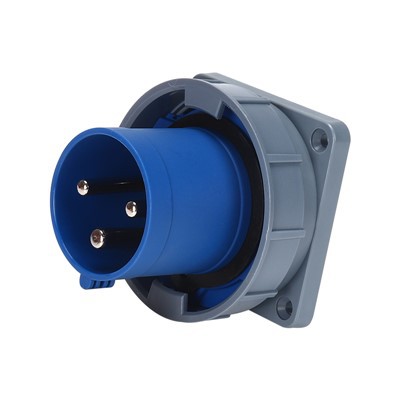
If you’re ready to chat, just reach out. We can send you free samples to test for 30 days (you don’t even have to pay for shipping), answer any question you have, and help you figure out the best way to upgrade your home’s safety. Electricity is useful, but it’s only useful if it’s safe. And that’s what we’re here for.
Industrial Plug References
- National Fire Protection Association. (2023). Home Electrical Fire Trends and Prevention Statistics. Quincy, MA: NFPA.
- Underwriters Laboratories Inc. (2022). Performance Requirements for Ground-Fault Circuit Interrupters. Northbrook, IL: UL.
- International Electrotechnical Commission. (2021). Safety Requirements for Household and Similar Electrical Outlets. Geneva, Switzerland: IEC.
- U.S. Consumer Product Safety Commission. (2022). Non-Fatal Electric Shock Injuries in Residential Settings. Bethesda, MD: CPSC.
- Thermal Engineering Research Institute. (2023). Overheating Risk in Residential Electrical Sockets. College Station, TX: TERI.
Zhejiang Hefeng Electric Co., Ltd.
Address: Wenzhou Daqiao Industrail Park, Beibaixiang Town, Yueqing City, Zhejiang Province, China
E-mail: hefengplug@chinahfe.com
WebSite: https://www.hfcee.com/
