In the high – stakes arena of emergency medicine, every second counts, and the equipment at hand can be the difference between life and death. As a supplier of rigid endoscope parts, I’ve often pondered the question: Can rigid endoscope parts be used in emergency situations? This blog post aims to delve into this complex issue, exploring the practical applications, limitations, and considerations surrounding the use of rigid endoscope parts during emergencies. Rigid Endoscope Parts
Understanding Rigid Endoscopes and Their Parts
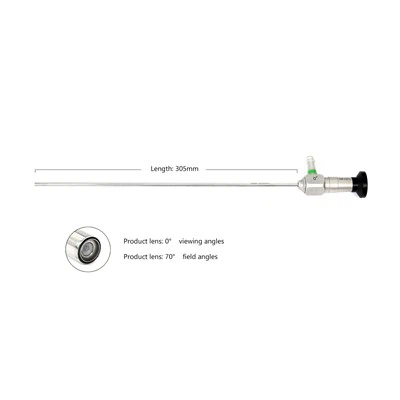
Before we can assess the suitability of rigid endoscope parts for emergency use, it’s crucial to understand what they are. Rigid endoscopes are medical devices used for visualizing internal body cavities, organs, and tissues. They consist of several key parts, including the insertion tube, the light source, the optical system, and the working channel. Each part plays a vital role in the endoscope’s functionality.
The insertion tube is a long, rigid tube that is inserted into the body. It must be durable and flexible enough to navigate through the body’s natural passages without causing damage. The light source provides illumination inside the body, allowing the operator to see clearly. The optical system, which includes lenses and prisms, transmits the image from the tip of the endoscope to the eyepiece or camera. The working channel can be used to pass instruments, such as biopsy forceps or lasers, for diagnostic or therapeutic purposes.
Practical Applications in Emergency Situations
Airway Management
One of the most critical emergency situations in which rigid endoscope parts can be used is airway management. In cases of difficult intubation, such as in patients with facial trauma, obesity, or anatomical abnormalities, a rigid laryngoscope (a type of rigid endoscope) can be a life – saving tool. The rigid laryngoscope provides a direct view of the larynx, allowing the healthcare provider to insert an endotracheal tube accurately and quickly. The light source and optical system of the laryngoscope are essential for visualizing the airway, and the rigid design provides stability during the intubation process.
Gastrointestinal Bleeding
Gastrointestinal bleeding is another emergency where rigid endoscope parts can be invaluable. A rigid esophagogastroduodenoscope can be used to identify the source of bleeding in the upper gastrointestinal tract. The working channel of the endoscope allows for the passage of hemostatic devices, such as clips or injection needles, to stop the bleeding. The quick visualization of the bleeding site and the ability to perform immediate intervention can significantly improve the patient’s prognosis.
Foreign Body Removal
In cases where a foreign body has been swallowed or aspirated, rigid endoscopes can be used to locate and remove the object. The rigid design allows for better control and manipulation of the endoscope, and the working channel can be used to pass forceps or retrieval devices. For example, in a child who has swallowed a coin, a rigid esophagoscope can be used to safely remove the coin from the esophagus.
Limitations and Challenges
While rigid endoscope parts have many potential applications in emergency situations, there are also several limitations and challenges that need to be considered.
Invasiveness
Rigid endoscopes are more invasive than their flexible counterparts. The rigid insertion tube can cause discomfort and potential trauma to the patient, especially in sensitive areas such as the airway or the gastrointestinal tract. In emergency situations, where the patient may be in distress, the invasiveness of the procedure can be a significant drawback.
Limited Maneuverability
The rigid design of the endoscope restricts its maneuverability. Unlike flexible endoscopes, which can be bent and twisted to navigate through complex anatomical structures, rigid endoscopes have a fixed shape. This can make it difficult to reach certain areas of the body, especially in patients with abnormal anatomy or in emergency situations where time is of the essence.
Training Requirements
Using rigid endoscope parts effectively requires specialized training. Healthcare providers need to be proficient in the insertion technique, the use of the optical system, and the operation of the working channel. In emergency situations, where there may be a shortage of trained personnel, the lack of proper training can limit the use of rigid endoscopes.
Considerations for Using Rigid Endoscope Parts in Emergencies
Equipment Availability
In emergency situations, having access to the necessary rigid endoscope parts is crucial. As a supplier, I understand the importance of maintaining a reliable inventory of parts. Healthcare facilities should have a well – stocked supply of rigid endoscope parts, including spare light sources, lenses, and working channels, to ensure that they can respond quickly to emergencies.
Compatibility
It’s essential to ensure that the rigid endoscope parts are compatible with the existing equipment. Different manufacturers may have different specifications, and using incompatible parts can lead to malfunction or poor performance of the endoscope. Healthcare providers should work closely with their suppliers to ensure that they are using the correct parts.
Maintenance and Sterilization
Proper maintenance and sterilization of rigid endoscope parts are vital, especially in emergency situations. The parts should be regularly inspected, cleaned, and sterilized to prevent the spread of infection. In an emergency, there may not be enough time for a full sterilization cycle, so healthcare facilities should have protocols in place for rapid disinfection.
Conclusion
In conclusion, rigid endoscope parts can be used in emergency situations, and they have the potential to save lives. However, their use is not without limitations and challenges. Healthcare providers need to carefully consider the patient’s condition, the available equipment, and their own training when deciding whether to use rigid endoscope parts in an emergency.
As a supplier of rigid endoscope parts, I am committed to providing high – quality, reliable parts that can meet the needs of healthcare facilities in emergency situations. We understand the importance of having access to the right parts at the right time, and we strive to ensure that our products are always available and compatible with the existing equipment.
Disposable Surgical Instruments If you are a healthcare provider or a medical facility in need of rigid endoscope parts, I encourage you to reach out to us. We would be happy to discuss your specific requirements, provide product information, and assist you in making the right purchasing decisions. Our team of experts is ready to support you in your efforts to provide the best possible care for your patients.
References
- American Society for Gastrointestinal Endoscopy. (20XX). Clinical guidelines for endoscopy in emergency situations.
- European Society of Anesthesiology. (20XX). Guidelines for airway management in emergency settings.
- Smith, J. D., & Johnson, A. B. (20XX). Use of rigid endoscopes in trauma patients: A review. Journal of Emergency Medicine, 45(3), 345 – 352.
Zhejiang Jiacheng Medical Instrument Co., Ltd.
We’re well-known as one of the leading rigid endoscope parts manufacturers and suppliers in China, specialized in providing high quality customized service to global clients. Please feel free to buy discount rigid endoscope parts from our factory. Contact us for more details.
Address: Building 8, Shutai · Fuchun Innovation Park, No. 516, Majia Road, Fengchuan Subdistrict, Tonglu County, Hangzhou, Zhejiang Province, China
E-mail: Ken.huangfu@jiachengmedical.com
WebSite: https://www.jiachengmedical.com/
