Hey there! As a supplier of Personal Protective Equipment (PPE), I’ve seen firsthand how crucial it is to have a solid PPE program in place. Whether you’re running a small business, a large corporation, or a healthcare facility, having a proper PPE program can protect your employees from a wide range of hazards. In this blog, I’ll break down the key components of an effective PPE program. Personal Protective Equipment

Hazard Assessment
The very first step in setting up a PPE program is conducting a thorough hazard assessment. You can’t just randomly hand out PPE; you need to figure out what kinds of risks your workers are facing. I’ve got clients in different industries, like construction, manufacturing, and healthcare, and each one has its own set of hazards.
For example, in construction, workers might be exposed to things like falling objects, sharp tools, and dust. So, you’d need to provide hard hats, safety glasses, and dust masks. In a healthcare setting, the risks are more about infectious diseases, so you’d focus on items like gloves, gowns, and face shields.
To do a proper hazard assessment, you can’t just sit in your office and guess. You’ve got to get out on the floor, talk to your employees, and see what they’re actually dealing with. Look at the tasks they perform, the equipment they use, and the environment they work in. Once you’ve identified all the hazards, you can start choosing the right PPE.
Selection of PPE
Once you know what hazards are present, it’s time to pick the right PPE. You can’t just go for the cheapest option; you need to make sure the equipment actually works. There are a lot of standards and regulations out there that PPE has to meet.
For instance, safety glasses should meet the ANSI Z87.1 standard, which ensures they can protect against impact, dust, and chemical splashes. Hard hats need to meet the ANSI Z89.1 standard to protect against falling objects. And when it comes to respirators, they have to be certified by the National Institute for Occupational Safety and Health (NIOSH).
When you’re selecting PPE, you also need to think about comfort and fit. If the equipment is too big or too small, or if it’s uncomfortable to wear, your employees aren’t going to use it. I’ve heard so many stories from clients about workers taking off their PPE because it was too hot or too tight. So, make sure you offer a variety of sizes and styles to accommodate different body types and preferences.
Training and Education
Just providing PPE isn’t enough. Your employees need to know how to use it properly. That’s where training and education come in. You need to teach your workers how to put on, take off, adjust, and maintain their PPE.
For example, when it comes to wearing a respirator, there’s a proper fit – testing process that needs to be followed. If the respirator doesn’t fit correctly, it won’t provide adequate protection. You also need to train your employees on when to use the PPE. In some cases, they might only need it for certain tasks, while in other situations, they need to wear it all the time.
I always recommend that my clients conduct regular training sessions, especially when there are new hazards or new types of PPE. You can also provide written materials, like handouts or posters, to reinforce the training. And don’t forget to keep records of the training, so you can prove that your employees have received the necessary education.
Maintenance and Inspection
PPE isn’t something you can just hand out and forget about. It needs to be regularly maintained and inspected to make sure it’s still in good working condition. For example, safety glasses can get scratched, hard hats can get cracked, and respirators can develop leaks.
You should have a schedule for inspecting and maintaining your PPE. This could involve checking the equipment before each use, doing a more thorough inspection on a weekly or monthly basis, and replacing any damaged or worn – out items.
When it comes to cleaning and disinfecting PPE, it’s important to follow the manufacturer’s instructions. Different types of PPE require different cleaning methods. For example, some gloves can be washed with soap and water, while others need to be disinfected with a specific solution.
Program Evaluation
Finally, you need to evaluate your PPE program on a regular basis. This means looking at how well the program is working, whether your employees are actually using the PPE, and if there are any areas that need improvement.
You can gather feedback from your employees through surveys or one – on – one conversations. They’re the ones on the front lines, so they’ll have valuable insights into what’s working and what’s not. You can also look at incident reports to see if there have been any injuries or illnesses that could have been prevented with better PPE.
Based on the results of your evaluation, you might need to make some changes to your program. Maybe you need to provide different types of PPE, improve the training, or adjust the maintenance schedule.
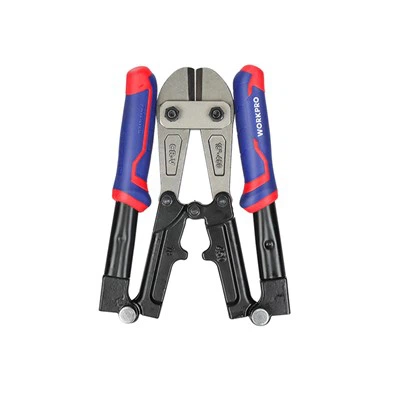
Insulated Pliers To sum it up, an effective PPE program involves a hazard assessment, proper selection of PPE, training and education, maintenance and inspection, and program evaluation. If you’re looking to set up or improve your PPE program, I’m here to help. I’ve got a wide range of high – quality PPE products, and I can provide guidance on all aspects of your program. Just reach out, and we can start a conversation about how to keep your employees safe.
References
- Occupational Safety and Health Administration (OSHA). Personal Protective Equipment Standards.
- American National Standards Institute (ANSI). Safety Standards for PPE.
- National Institute for Occupational Safety and Health (NIOSH). Certification of Respirators.
Hangzhou GreatStar Industrial Co., Ltd.
Hangzhou GreatStar Industrial Co., Ltd. is one of the most professional personal protective equipment manufacturers and suppliers in China, specialized in providing high quality products and service. We warmly welcome you to wholesale high-grade personal protective equipment at competitive price from our factory. Contact us for pricelist.
Address: No. 35, Jiuhuan Road, Jiubao Town, Hangzhou, China
E-mail: sales@workprotool.com
WebSite: https://www.workprotool.com/
