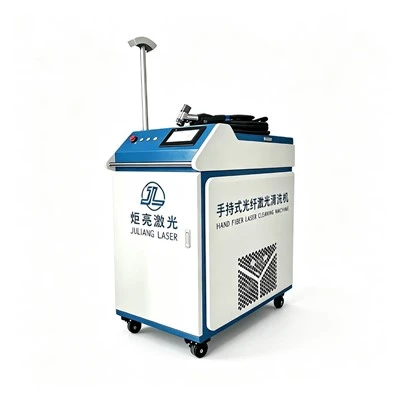
In the manufacturing landscape of the automotive industry, laser welding machines have emerged as a game – changer, offering precision, speed, and a high – quality finish. As a supplier of laser welding machines, I’ve witnessed firsthand the unique requirements that the automotive field places on these sophisticated pieces of equipment. Laser Welding Machine
Precision and Accuracy
One of the most critical requirements in the automotive field is precision. Automotive components, such as body frames, engine parts, and transmission components, demand extremely accurate welding. A slight deviation in the welding process can lead to structural weaknesses, which may compromise the safety and performance of the vehicle.
For body frame welding, the laser welding machine must be able to maintain a consistent weld bead width and depth. The tolerance for error in these applications is often in the range of micrometers. This means that the machine’s control system needs to be highly precise, with the ability to adjust parameters such as laser power, pulse duration, and beam focus in real – time.
In the case of engine parts, which are subject to high temperatures and mechanical stresses, the welding joint must be flawless. The laser welding machine should be capable of creating a strong metallurgical bond between different metals or alloys used in engine construction. For example, joining aluminum and steel in engine components requires a machine that can precisely control the heat input to avoid issues like cracking or porosity in the weld.
High – Speed Welding
The automotive industry operates on a large scale, with high production volumes. To keep up with the demand, laser welding machines need to be able to weld at high speeds. This not only increases the overall productivity of the manufacturing process but also reduces costs.
Modern laser welding machines for the automotive field are equipped with high – power lasers and advanced scanning systems. These features allow the machine to move the laser beam quickly across the workpiece, completing welds in a fraction of the time compared to traditional welding methods. For example, in the production of automotive body panels, a laser welding machine can weld multiple seams in a matter of seconds, enabling the assembly line to maintain a high throughput.
However, high – speed welding also presents challenges. The machine must be able to maintain the quality of the weld while operating at high speeds. This requires careful calibration of the laser parameters, such as power density and pulse frequency, to ensure that the weld pool solidifies properly and that there are no defects in the joint.
Adaptability to Different Materials
The automotive industry uses a wide variety of materials, including steel, aluminum, magnesium, and various composites. Each material has its own unique properties and welding requirements, which means that a laser welding machine used in this field must be adaptable.
When welding steel, which is a commonly used material in automotive manufacturing, the laser welding machine can use a high – power continuous – wave laser. Steel has a relatively high melting point and good thermal conductivity, so the machine needs to provide enough energy to create a deep and strong weld.
Aluminum, on the other hand, has a lower melting point and higher reflectivity compared to steel. This requires a different approach. A pulsed laser or a laser with a specific wavelength that is better absorbed by aluminum may be used. Additionally, special shielding gases may be required to prevent oxidation and ensure a high – quality weld.
Magnesium is another lightweight material used in the automotive industry to reduce vehicle weight and improve fuel efficiency. Welding magnesium is challenging due to its high reactivity and low boiling point. A laser welding machine for magnesium applications needs to have precise control of the welding atmosphere and heat input to avoid issues such as magnesium evaporation and porosity.
Automation and Integration
Automation is a key trend in the automotive industry, and laser welding machines need to fit seamlessly into automated production lines. This requires the machines to be highly programmable and capable of communicating with other manufacturing equipment.
Modern laser welding machines can be integrated with robotic arms, which allows for flexible and precise positioning of the laser beam. The robots can be programmed to follow complex welding paths, enabling the welding of irregularly shaped automotive components. The machine’s control system should be able to interface with the robot’s controller, ensuring smooth and coordinated operation.
In addition to robotic integration, laser welding machines also need to be able to communicate with other sensors and monitoring devices on the production line. For example, sensors can be used to detect the position and orientation of the workpiece, and the machine can adjust its parameters accordingly. This real – time feedback loop helps to ensure the consistency and quality of the welds.
Safety
Safety is of utmost importance in the automotive manufacturing environment. Laser welding machines emit high – energy laser beams, which can be extremely dangerous to human eyes and skin. Therefore, the machines must be equipped with comprehensive safety features.
The laser welding machine should have an enclosed welding chamber to prevent the laser beam from escaping. The chamber should be made of materials that can absorb and reflect the laser energy, protecting operators from direct exposure. Additionally, the machine should be equipped with safety interlocks, which will automatically shut off the laser if the chamber door is opened or if there is a malfunction in the system.
Personal protective equipment, such as laser – resistant glasses and gloves, should also be provided to operators. Training programs should be in place to ensure that operators are aware of the potential hazards associated with laser welding and know how to use the equipment safely.
Quality Control
Quality control is a crucial aspect of automotive manufacturing, and laser welding machines need to support rigorous quality control measures. The machine should be able to provide real – time monitoring of the welding process, including parameters such as laser power, welding speed, and weld penetration.
Advanced laser welding machines are equipped with sensors that can detect weld defects, such as cracks, porosity, or incomplete fusion. These sensors can use techniques such as optical imaging, ultrasonic testing, or infrared thermography to monitor the weld pool and detect any abnormalities.
The data collected during the welding process can be stored and analyzed to identify trends and potential issues. This information can be used to improve the welding process, adjust machine parameters, and ensure the consistent quality of the welds.
Cost – Effectiveness
While the automotive industry demands high – performance laser welding machines, cost – effectiveness is also a significant consideration. Manufacturers are constantly looking for ways to reduce production costs without sacrificing quality.
As a supplier, we understand the importance of providing cost – effective solutions. Our laser welding machines are designed to be energy – efficient, reducing the overall operating costs. We also offer maintenance and support services to minimize downtime and ensure the long – term reliability of the machines.
In addition, we work closely with our customers to understand their specific requirements and provide customized solutions. This helps to optimize the use of the laser welding machine and reduce unnecessary costs associated with over – specification or under – performance.
Conclusion

The automotive field has unique requirements for laser welding machines, including precision, high – speed welding, adaptability to different materials, automation, safety, quality control, and cost – effectiveness. As a supplier of laser welding machines, we are committed to meeting these requirements and providing our customers with the best possible solutions.
Air-Cooled Handheld Laser Welding Machine If you are in the automotive manufacturing industry and are looking for a high – quality laser welding machine that can meet your specific needs, we would be more than happy to discuss your requirements. Our team of experts can provide you with detailed information about our products and services, and help you find the right solution for your production line. Contact us today to start a conversation about how our laser welding machines can enhance your manufacturing process.
References
- "Laser Welding in Automotive Manufacturing" – Automotive Engineering Journal.
- "Advanced Materials and Welding Techniques in the Automotive Industry" – Springer Publications.
- "Safety Guidelines for Laser Welding Equipment" – International Laser Safety Association.
Hebei Juliang Technology Co., Ltd.
Hebei Juliang Technology Co., Ltd. is one of the most professional laser welding machine manufacturers and suppliers in China, featured by quality products and good service. Please rest assured to buy CE approved laser welding machine from our factory. Welcome to contact us for customized service and discount information.
Address: Building 1, Juluang Industrial Park, Gaocheng District, Shijiazhuang City, Hebei Province, China
E-mail: sales@jlwmb.com
WebSite: https://www.julasers.com/
